
I'm Dr. Robert Heller, and I turned 90 this year.
I know. I get that reaction a lot.
I've been a physician for over sixty years. Internal medicine. I've seen a lot of patients, a lot of lives, and one thing always stuck with me. Two people, same age, same general situation. One of them is just… thriving. Sharp, energetic, moving through the world. The other one isn't. And it's not about luck.
I've been trying to understand that gap my entire career. And in the last several years, I finally feel like science has started giving us some real answers.
That's what I want to talk about today. Not in a lecture-y way. Just… what I've learned, and what my partner and I decided to do about it.
Here's something I tell people: aging isn't a result of just one thing. It never was.
For years, patients would come in and say, "I'm eating well, I'm sleeping, I'm exercising, I'm doing everything right, so why do I feel like this?" And honestly, I didn't always have a complete answer.
But in recent years, researchers have gotten a much clearer picture. In 2023, a major paper came out identifying twelve specific biological processes that tend to change as we get older. Scientists call them the Hallmarks of Aging.
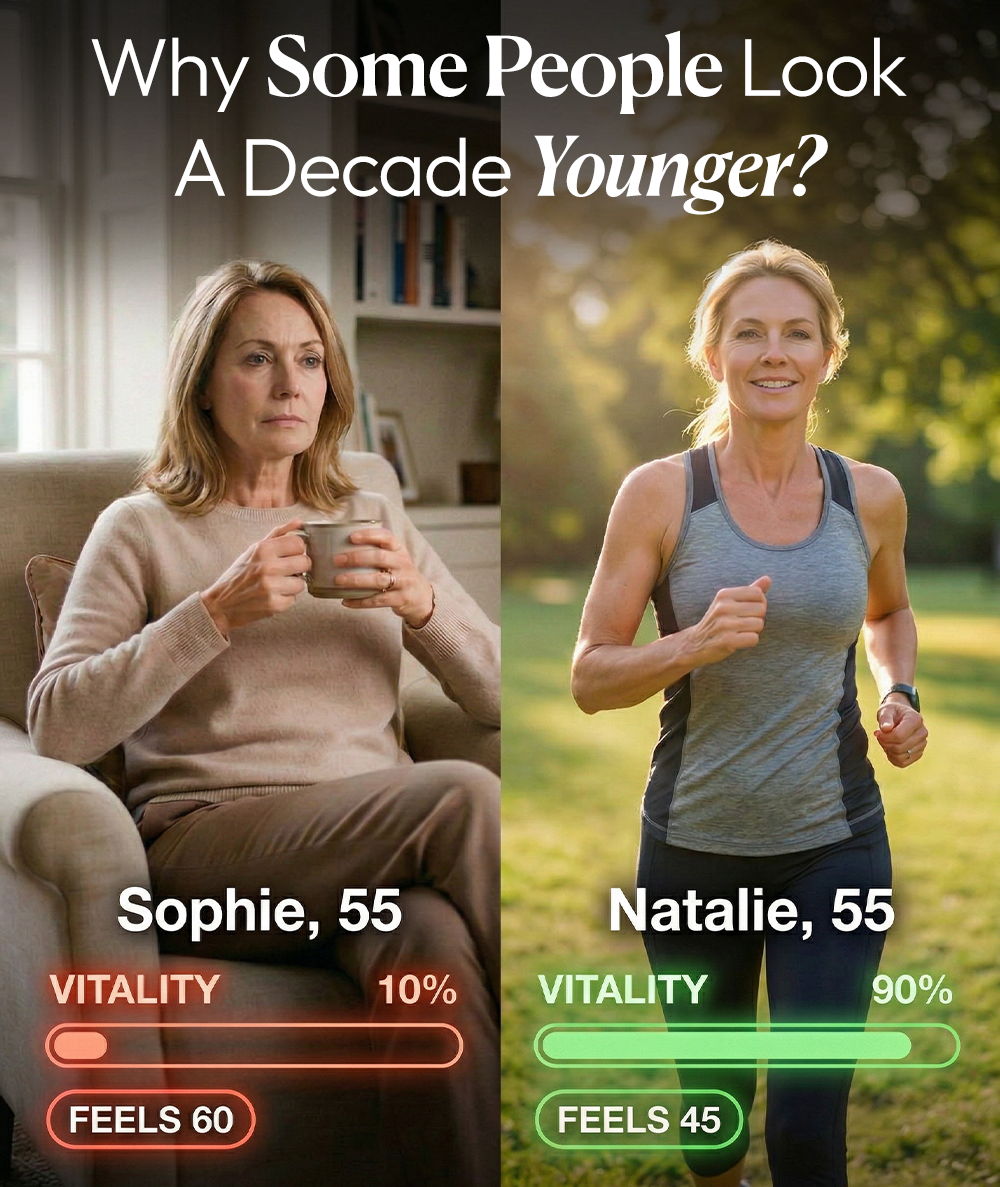
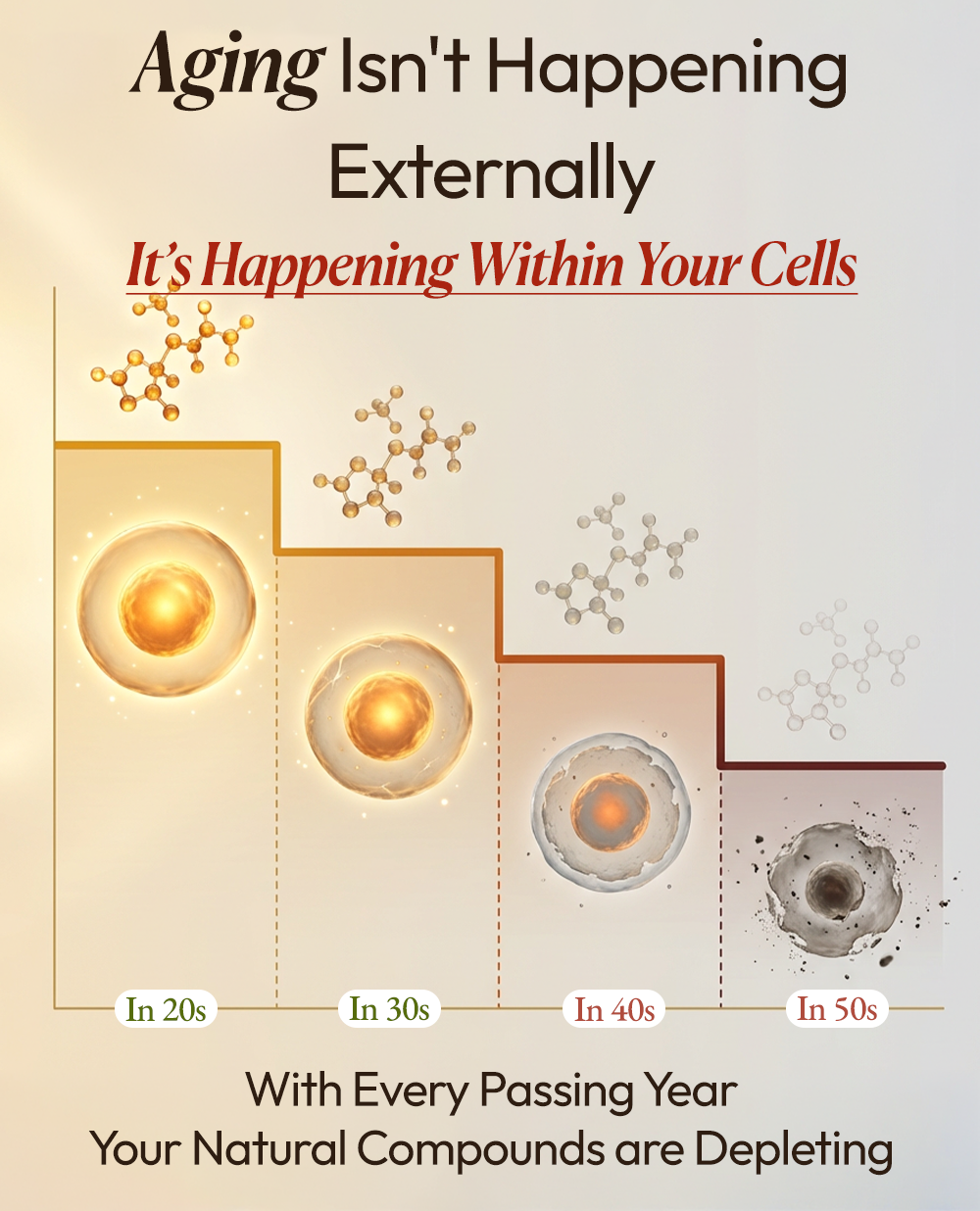
And what struck me reading it was, this is the answer. This is why two people the same age can feel so different. It's not willpower, it's not attitude, it's not just "good genes." It's whether these underlying systems are getting what they need.
Here's what's important. Your body needs certain ingredients to keep those systems running. And when you're young, it mostly takes care of that on its own. But as you get older? It can't keep up the same way. Your diet probably isn't filling the gap. And over time, you start to notice.
The kind of tired that doesn't go away after a good night's sleep. The brain fog shows up in the afternoon. The stiffness in the morning. The feeling that your body just isn't bouncing back the way it used to.
Most people assume that's just aging. And to a degree, it is. But I believe a lot of it is actually a gap. A gap between what your cells need and what they're getting.
So I partnered with my colleague Dimitri Villard, Harvard background, Master's in Chinese Medicine, helped found the USC Institute for Integrative Medicine, and we put together a team of scientists and physicians.
The goal was simple: look at the research and figure out which specific compounds have the best evidence for supporting these aging processes.
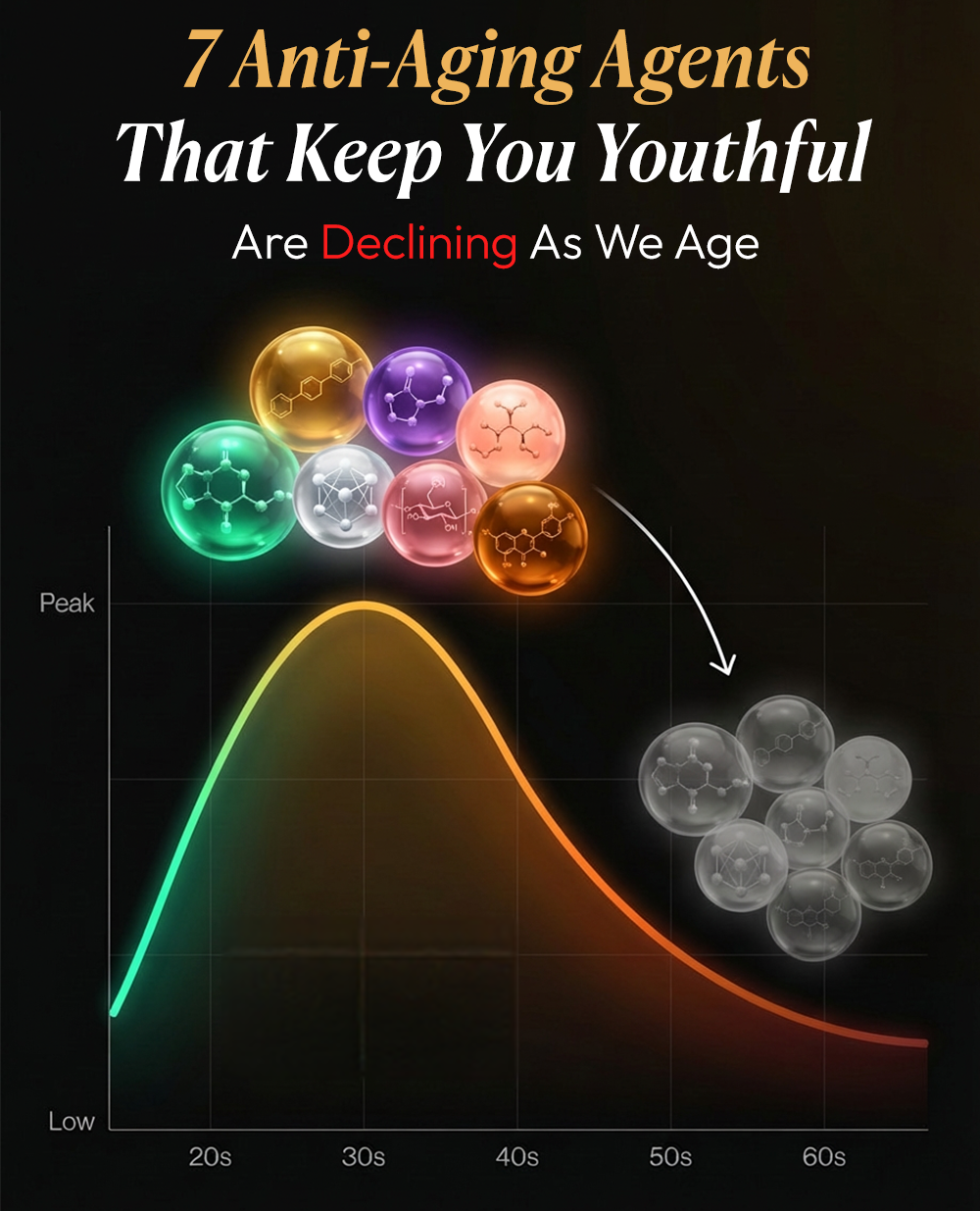
Look at the research. Not marketing. Not trends. Just: what does the published research actually say?
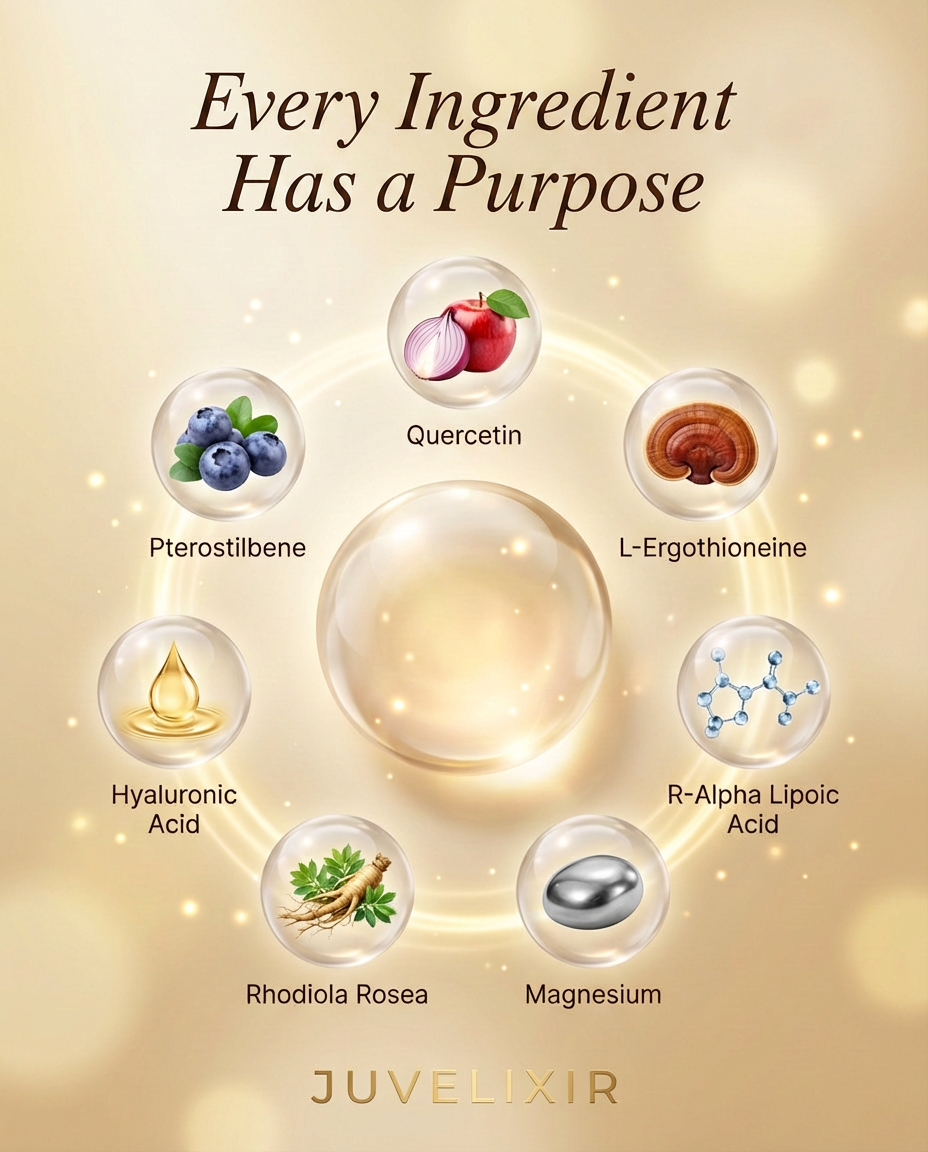
We kept landing on the same seven ingredients. Let me give you a quick sense of each one.
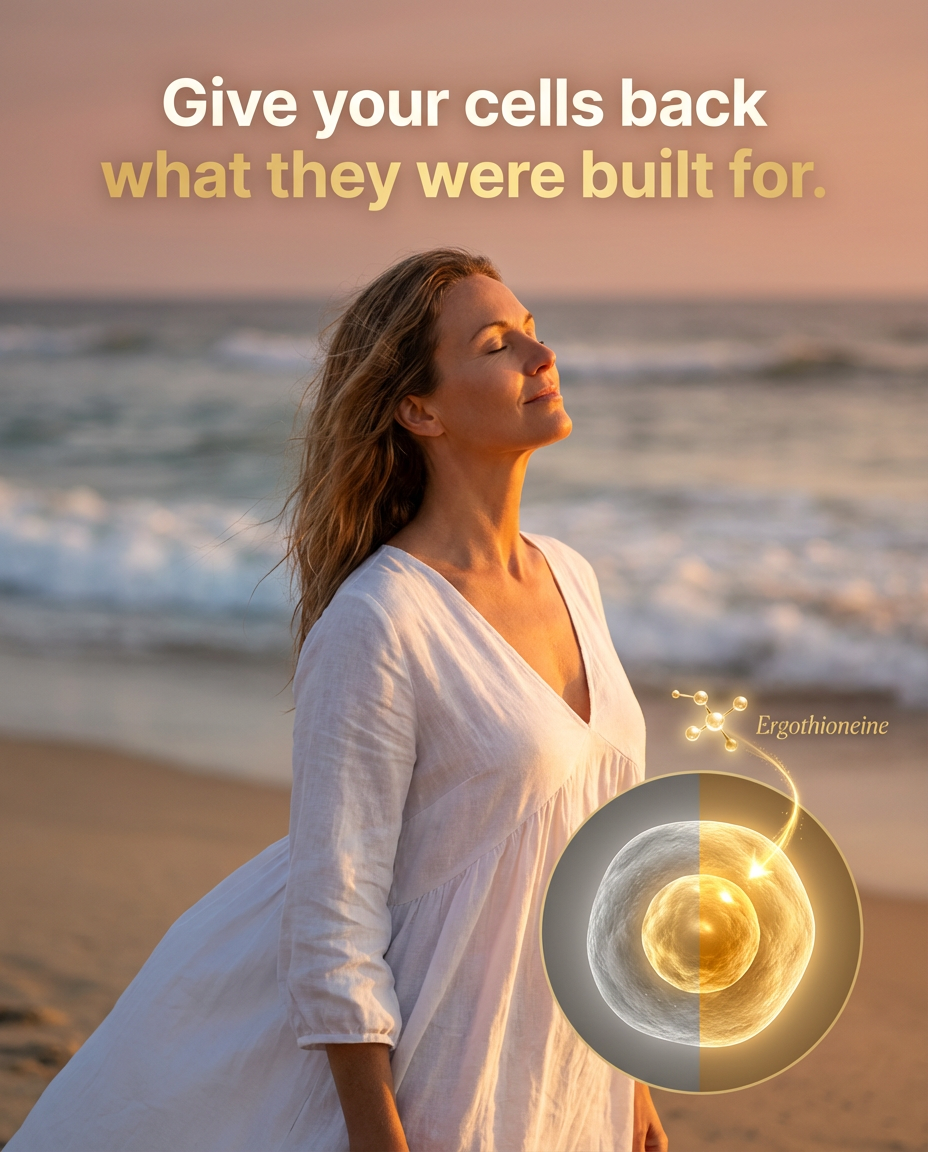
The first one actually surprised me. It's called ergothioneine. Your body has a dedicated biological transporter whose only job is to pull this single ingredient into your cells. That's remarkable. It means your body was built to receive it. But you can't make it yourself. It comes from certain mushrooms, and most of us just aren't getting enough.
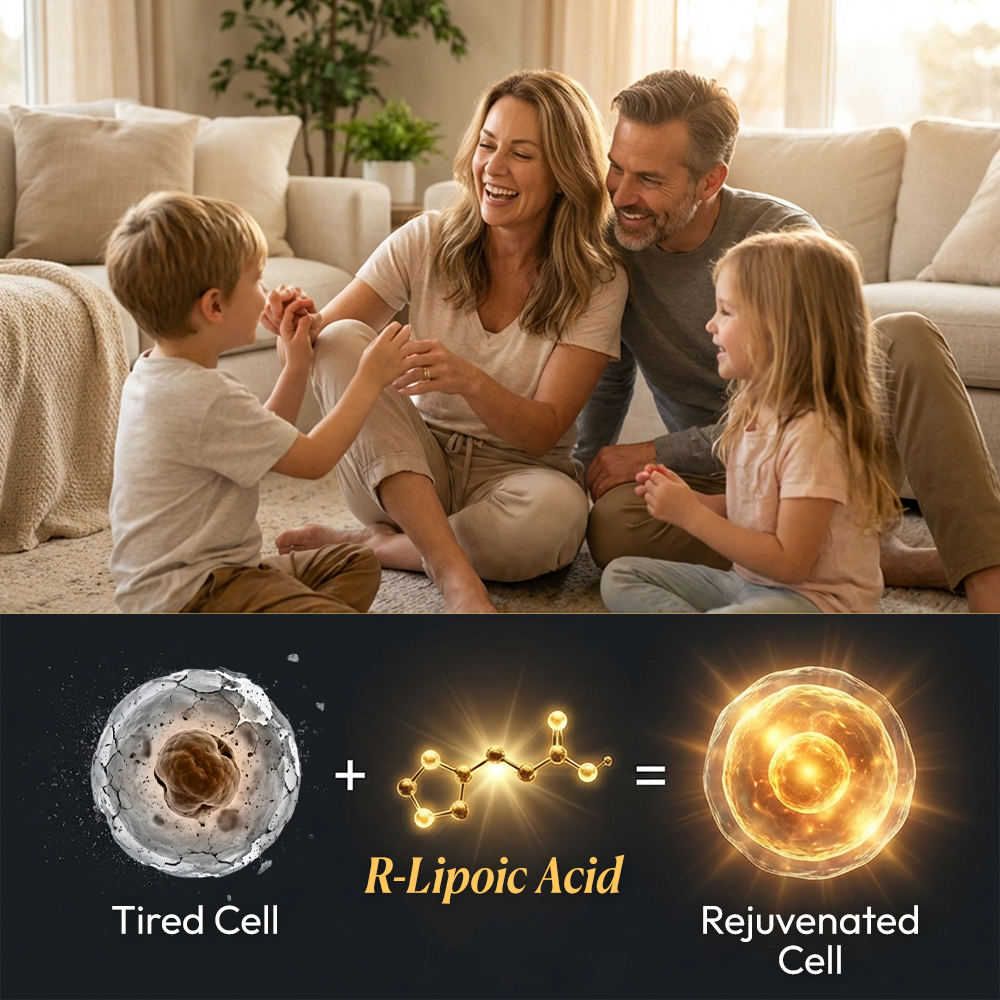
Then there's R-lipoic acid. If you've ever felt that low-grade tiredness that coffee doesn't fix, that feeling of running on empty, this is the level where that often starts. It's about how your cells produce energy. R-lipoic acid works inside the mitochondria, which is where that process happens. And your body makes less of it as you age.
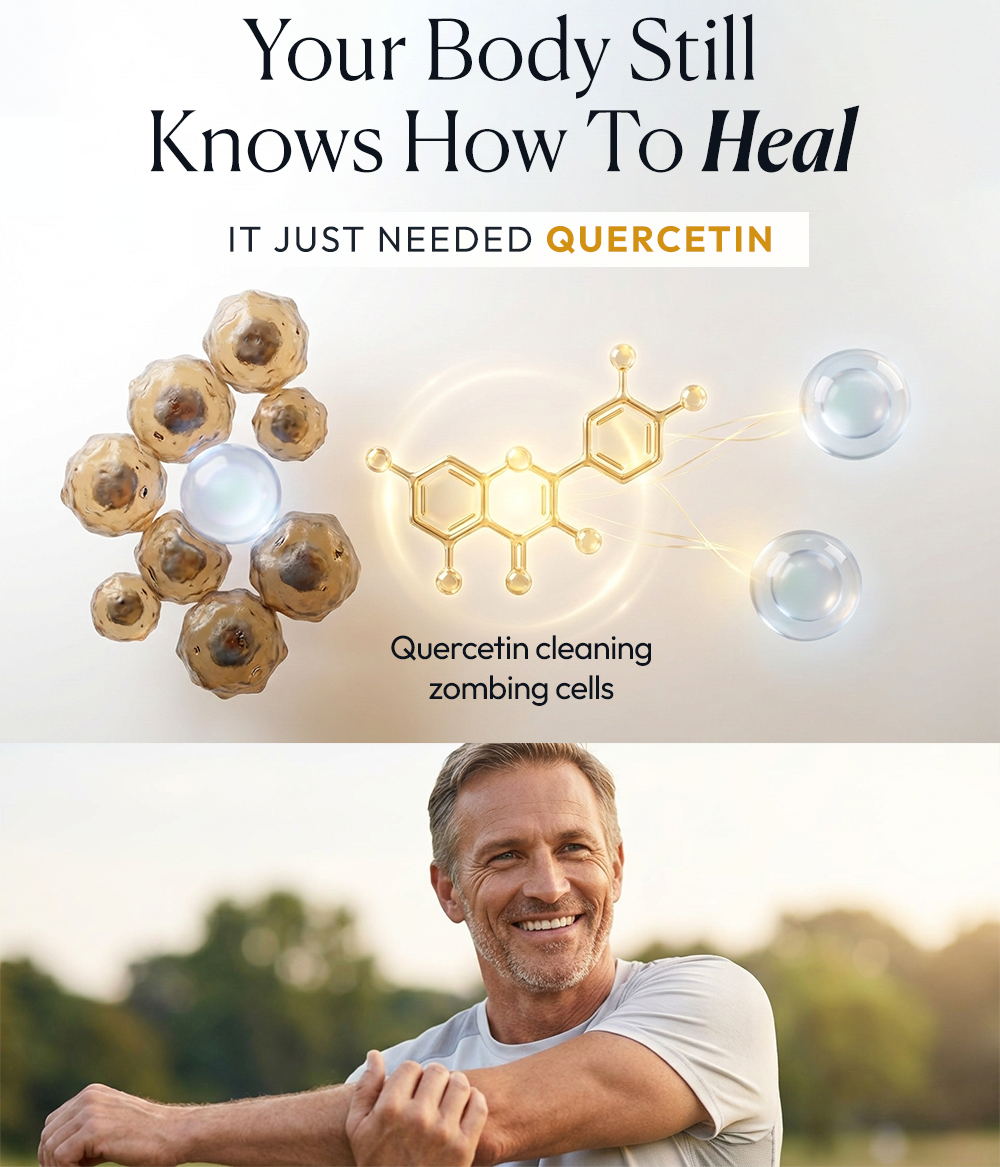
Quercetin is next. Over time, some cells basically stop working but don't go away. Researchers call them senescent cells, though I've heard people call them "zombie cells," which is a pretty apt description. Quercetin supports the body's natural process of clearing them out. The tricky part is that it's hard to absorb from food alone, so the form of quercetin matters a lot.
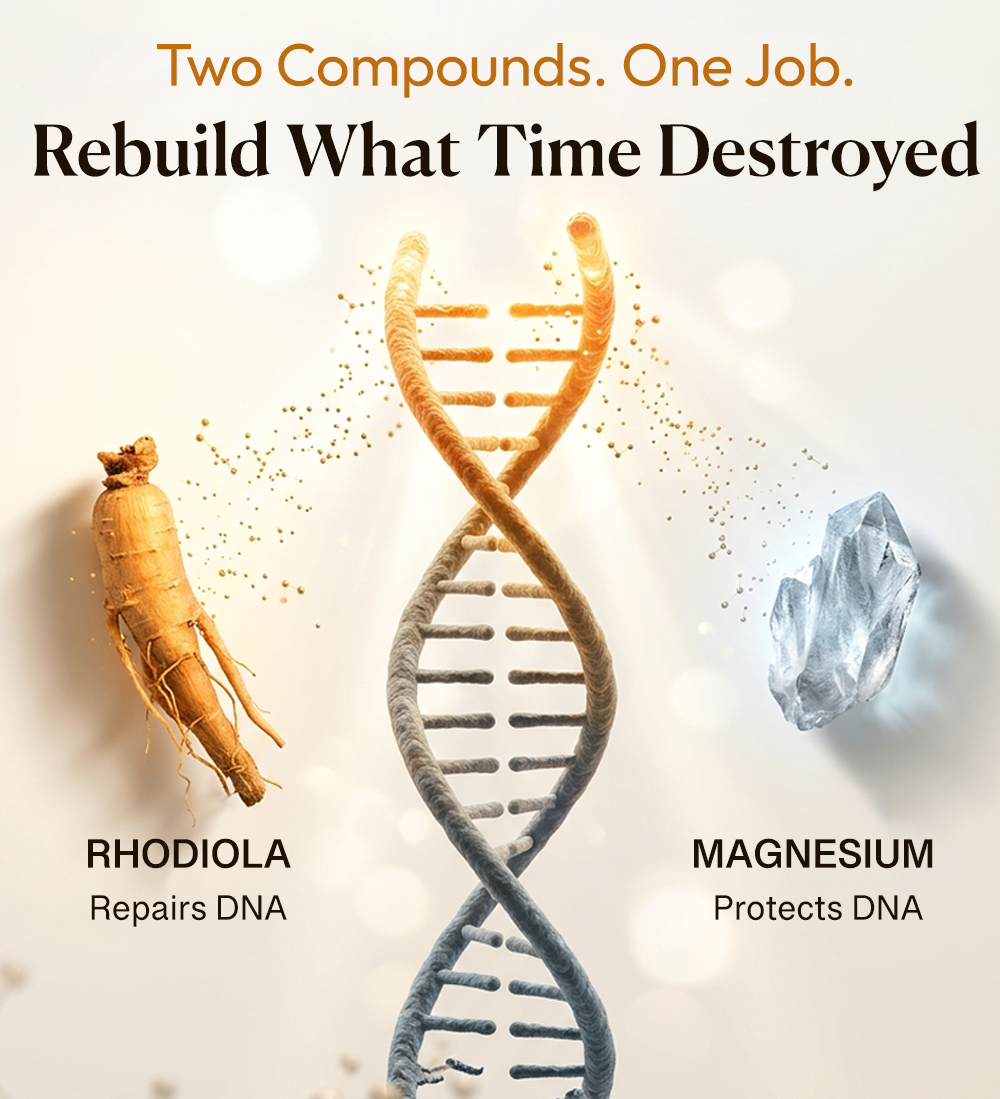
Rhodiola and magnesium we put together because they work in tandem. Rhodiola is an adaptogen. It's been used for centuries because it seems to help the body handle stress better. Magnesium is involved in hundreds of biochemical processes, and stress burns through it fast. A lot of people are low on magnesium without knowing it. Together, these two help with recovery, sleep, and just steady energy.
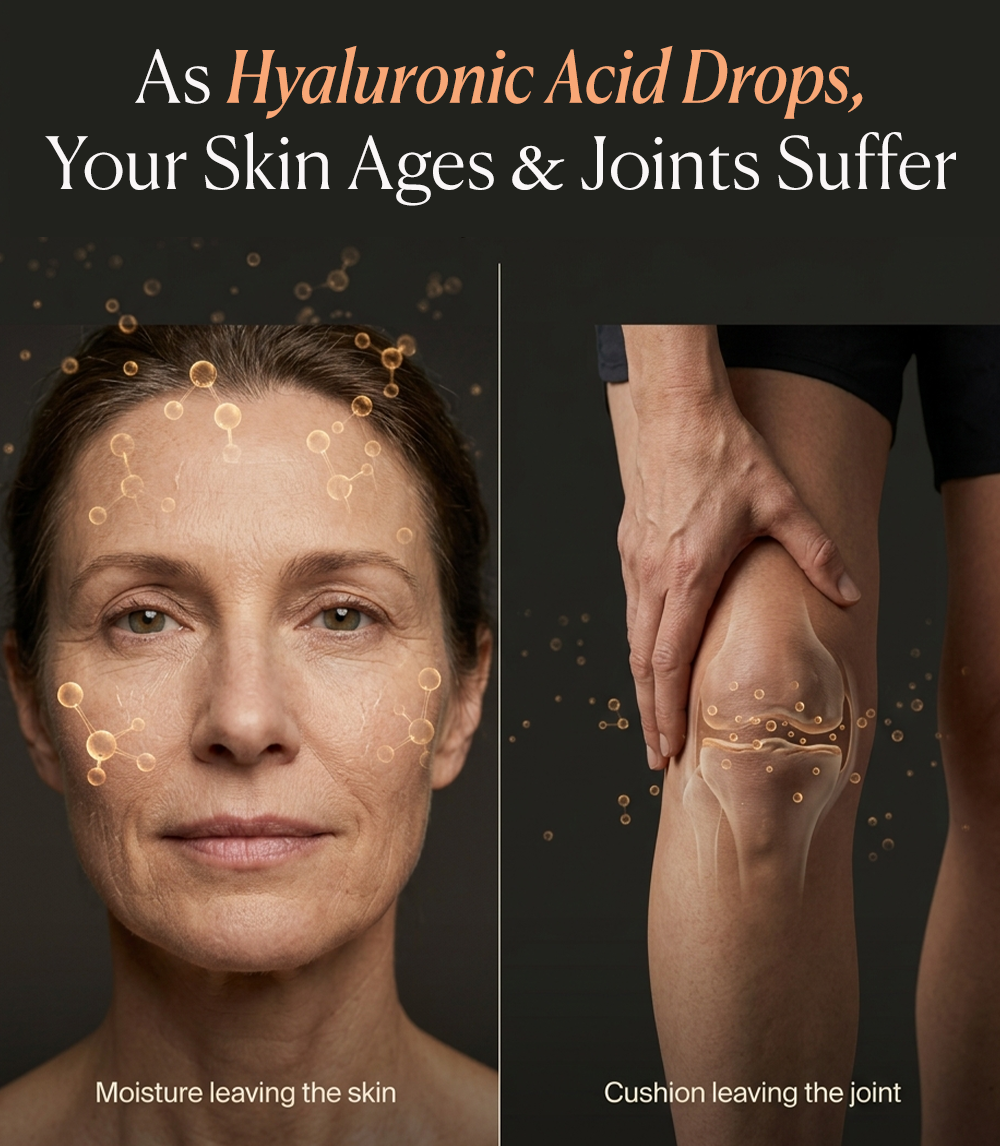
Hyaluronic acid, and this one I love, because it surprises people. You probably think of it as a skin ingredient. But when you take it orally, it works systemically. Meaning it supports both your skin and your joints from the inside. By the time most people are in their 50s, they've lost roughly half of what they had in their 20s. Dry skin and stiff joints aren't two separate problems. They're often the same one.
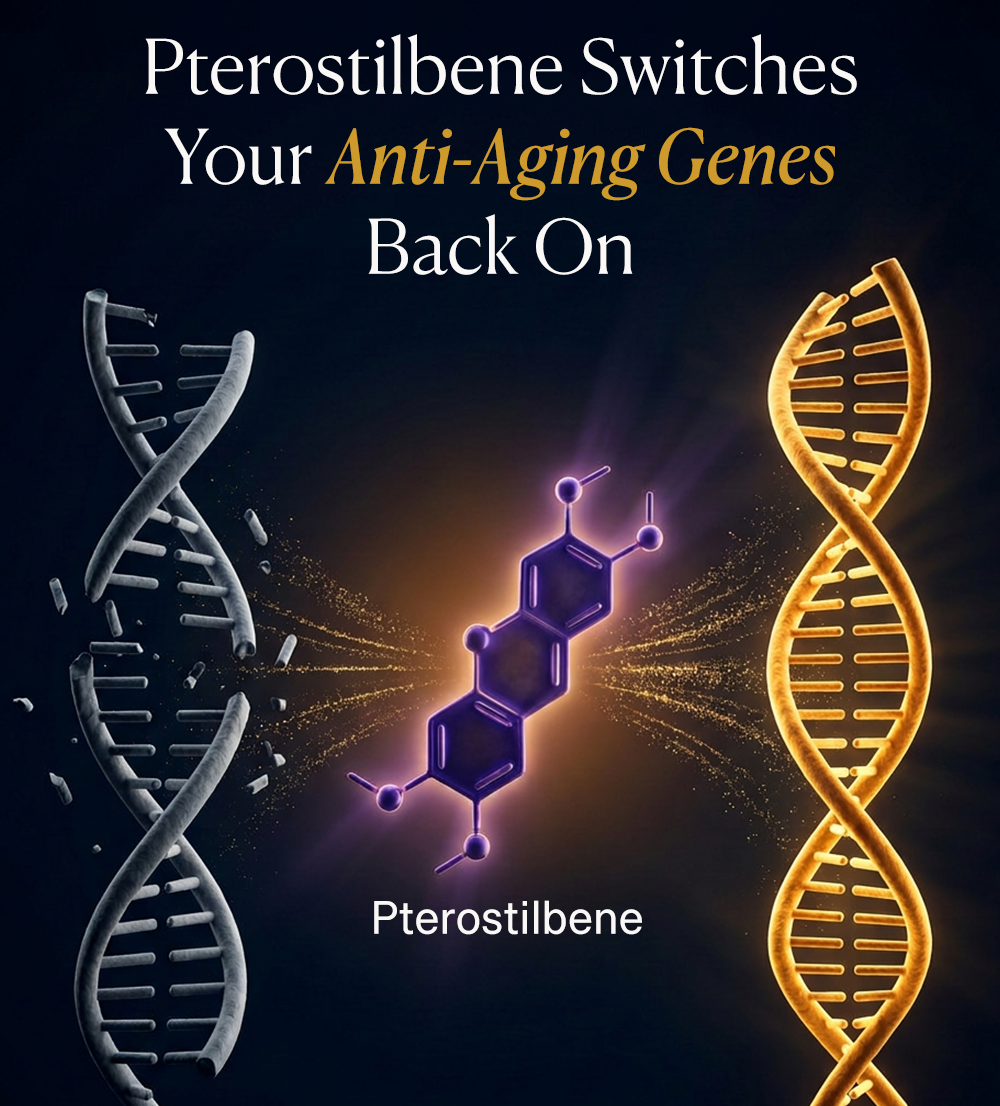
And finally, pterostilbene. This one operates at a deeper level. It supports the proteins that regulate your cells' own maintenance and repair systems. It's related to resveratrol but absorbed better. People don't always notice it quickly, but over time, there's often a shift. A sense that healthy choices are actually happening again.
Once we knew what we wanted, we ran into a wall. We couldn't find a single product that had all seven in the right forms. Not even close.
R-lipoic acid, most products use a cheaper synthetic version. Quercetin, often in forms your body barely absorbs. And asking someone to take eight different supplements a day is just not realistic.
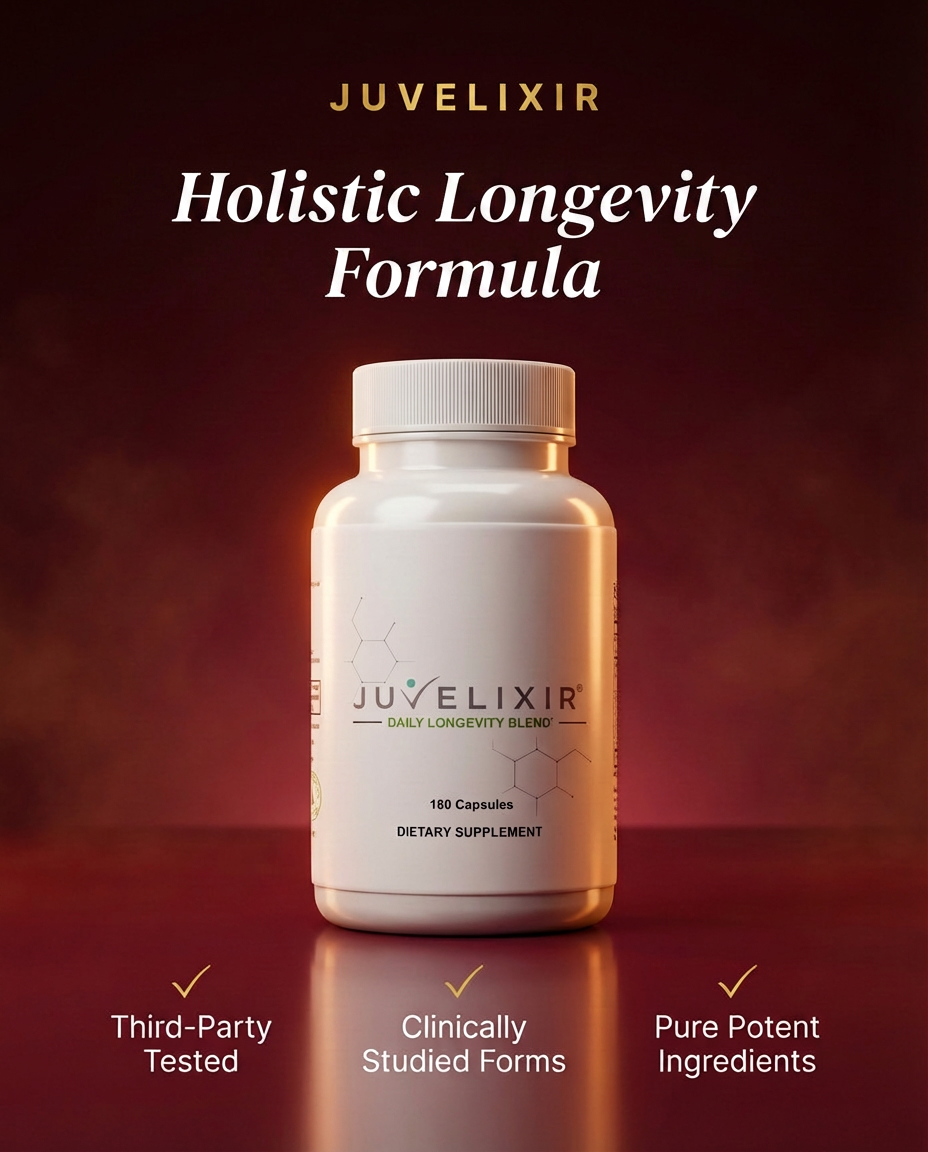
So we built it ourselves in the USA.
We made a decision early on that we'd only use ingredient suppliers who had done their own published human research on their products. Not just "we found a study on quercetin somewhere." The actual supplier, the actual form, the actual clinical data, and human clinical trials. That costs more. Significantly more. But it's the only way to know what you're actually giving people.
We also added black pepper extract, because several of these ingredients need a little help getting fully absorbed. It's a small thing, but it matters.
And then we did something that I honestly think more companies should be required to do. We had every batch tested by an independent certified laboratory. Not our own lab. An outside one. To confirm that what's listed on the label is actually in the bottle, in the amounts we say.
That's not the standard in this industry. It should be.
I want to be honest with you about what this is.
Juvelixir is not a drug. It doesn't treat or cure anything. If you're looking for a miracle, this isn't it. And frankly, you should be skeptical of anyone who tells you they have one.
What it is, what I genuinely believe it is, is a way to give your cells the support they're not getting anywhere else. The raw materials for those twelve biological processes to keep doing their jobs.
I spent over fifty years wishing I had something like this to recommend to patients. Not as a substitute for the basics. Diet, sleep, movement, and managing stress. But alongside them. As the missing piece.
I'm 90. I'm still here, still practicing medicine, still curious. I can't promise you those things. But I can tell you that this formula, built on real research, made with premium ingredients, verified by independent testing, is the one I'd put in front of anyone who asked me what they should be doing for their long-term health.
It's called Juvelixir. And I think it's worth your attention.
Hear From Our Satisfied Customers
FAQs
-
Juvelixir™ is formulated to support cellular energy, antioxidant defense, and healthy aging. It works at the mitochondrial level to help your body maintain vitality, clarity, and resilience over time.
References
-
https://pubmed.ncbi.nlm.nih.gov/37561026/
-
https://pubmed.ncbi.nlm.nih.gov/20716298/
-
https://pubmed.ncbi.nlm.nih.gov/31542391/
-
https://pubmed.ncbi.nlm.nih.gov/37169278/
-
https://pubmed.ncbi.nlm.nih.gov/38398820/
-
https://pubmed.ncbi.nlm.nih.gov/29210129/
-
https://pubmed.ncbi.nlm.nih.gov/34203487/
-
https://pubmed.ncbi.nlm.nih.gov/9619120/